“Where words fail, music speaks.” – Jackie McCarthy
Music has a remarkable way of bringing people together. A familiar melody can spark a cherished memory, a favorite song can lift someone’s spirits, and a few notes can create a connection when words are difficult to find.
At St. James Place, music is more than a source of entertainment. It’s an important part of how we support residents’ emotional well-being, cognitive engagement, social connections, and overall quality of life.
Through weekly visits from two professional music therapists, residents in Assisted Living and Memory Care have opportunities to experience the many benefits of music therapy. Whether singing familiar songs, participating in a group choir, playing instruments, moving to a rhythm, or simply listening, residents are encouraged to participate in ways that are meaningful and comfortable for them.
And sometimes, the most meaningful moments happen with just one familiar song.
What Is Music Therapy, and Why Does It Matter?
While music can certainly provide enjoyment, professional music therapy goes much deeper.
Music therapy is an evidence-based clinical profession in which a credentialed music therapist uses music intentionally to address individual therapeutic goals. These goals may include supporting emotional expression, encouraging communication, stimulating memory, promoting movement, and creating opportunities for social connection.
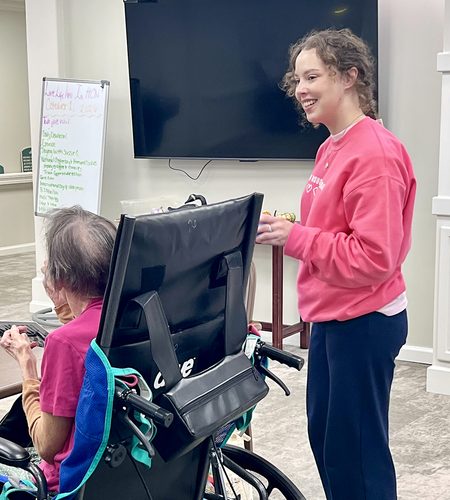
As music therapist Emily Claire Burdette explains, each session has a purpose.
“It’s not just about choosing the music and playing those familiar songs; we are consistently observing the reactions, adapting activities, and considering how music can help support their individual needs through goals and objectives.”
That individualized approach is especially meaningful in senior living and memory care. Every resident has a unique history, musical background, personality, and set of abilities. A successful music therapy session doesn’t require everyone to sing, dance, or participate in the same way.
For one resident, it might mean singing every word to a favorite hymn. For another, it could be tapping a foot, smiling at a familiar melody, or enjoying the music alongside friends.
As Emily puts it, “A successful music therapy session for me is when the residents feel included, engaged, and comfortable to be themselves.”
Music Therapy in Memory Care: Creating Connection Beyond Words
For individuals living with Alzheimer’s disease and other forms of dementia, communication and memory can become increasingly challenging. However, memory loss does not take away a person’s individuality, emotions, or ability to experience meaningful moments.
This is something Emily has come to appreciate through both her professional experience and her personal life. Her grandfather was diagnosed with Alzheimer’s, and before she knew about music therapy, she witnessed firsthand how familiar songs created opportunities for connection during her visits with him.
Today, she brings that same understanding to her work with St. James Place residents.
During weekly Memory Care sessions, Emily incorporates live and recorded music, active music-making, movement, listening, reminiscence, and conversation. She pays close attention to residents’ responses and adjusts each session to meet their needs.
Familiar music from the 1940s through the 1970s often sparks engagement, particularly classic love songs, country music, gospel favorites, and artists such as Elvis Presley, The Beatles, and Dolly Parton.
Sometimes, a song creates an immediate response.
Emily recalls introducing “Edelweiss” from The Sound of Music during a session with a resident named Mr. M. He immediately lit up, smiling widely, playing his instrument rhythmically, and singing along. What began as a familiar melody became an opportunity for him to connect with the music and the people around him.
Another resident, Mrs. A., regularly sings along to familiar songs, including “Amazing Grace.” Even when a song is unfamiliar, she often taps along rhythmically and joins the conversation afterward.
These moments demonstrate something important: meaningful participation doesn’t always require words.
As Emily explains, “Music in memory care matters because it reminds us that even when memories or cognition may fade, that individual’s ability to feel, connect, and experience love and joy is always there.”
For families navigating the challenges of dementia, this is a powerful reminder that their loved ones can continue to experience connection, comfort, and happiness in meaningful ways.
The Sunshine Singers: Bringing Residents Together Through Music
Music therapy at St. James Place also creates opportunities for residents to build friendships, explore creativity, and experience the joy of making music together.
Music therapist Jackie McCarthy leads a resident choir in Assisted Living affectionately known as the Sunshine Singers.
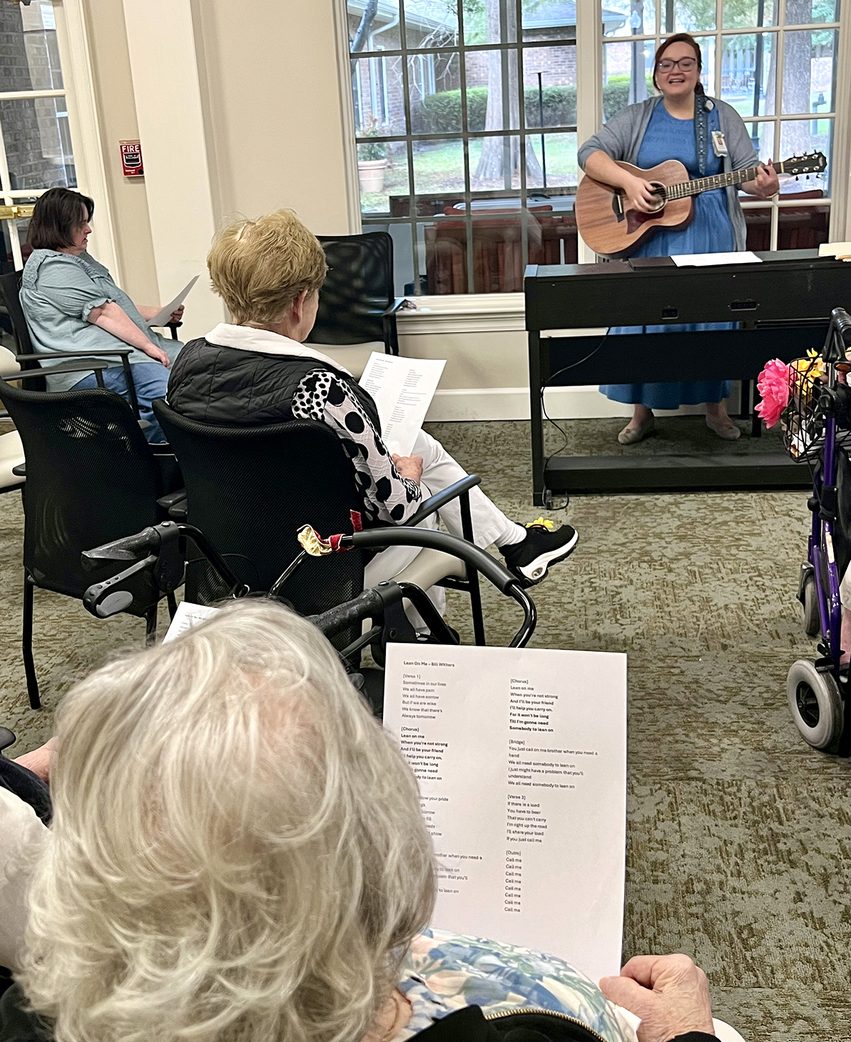
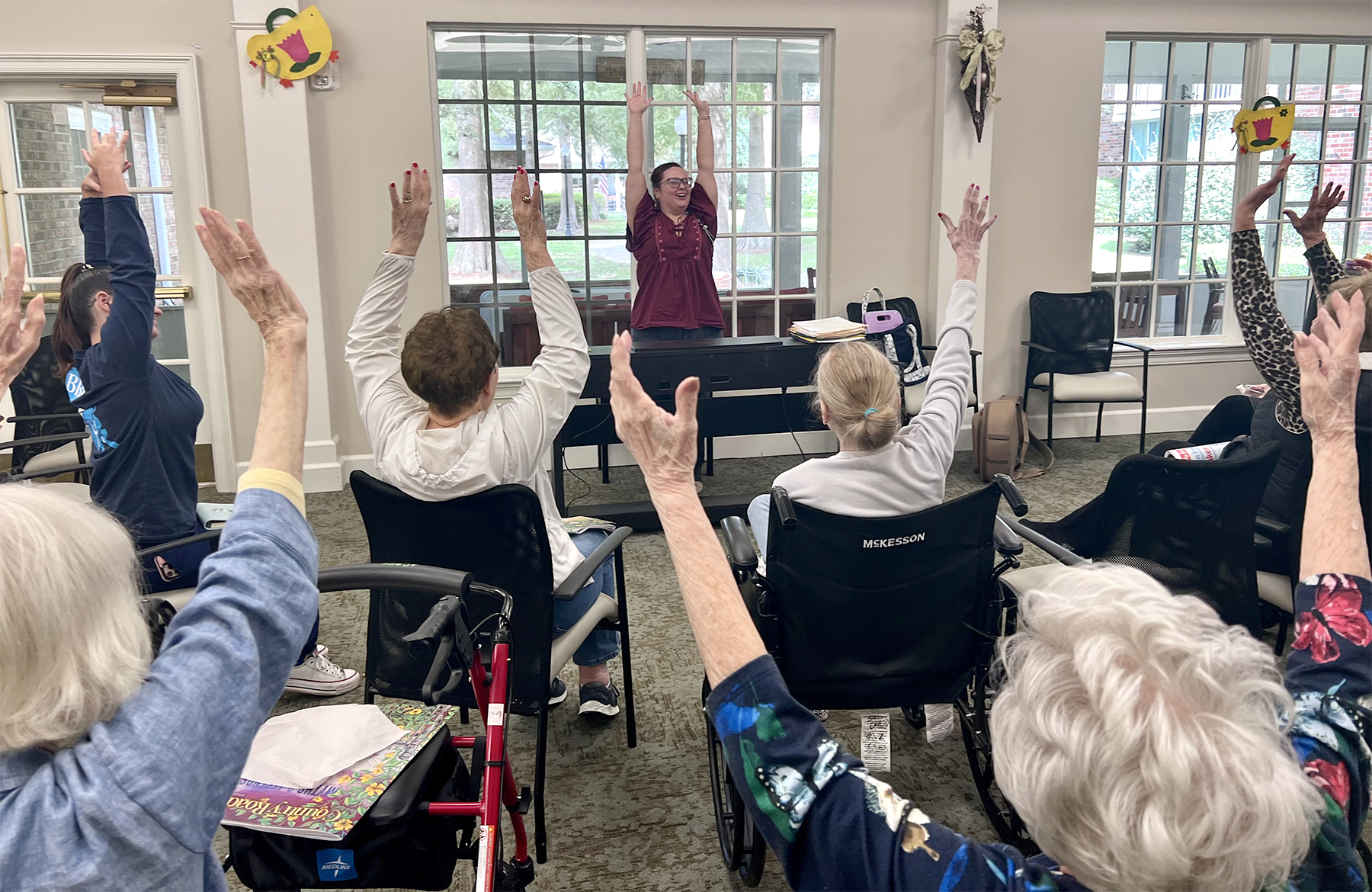
Choir rehearsals begin with approximately 10 to 15 minutes of preparation, including stretching, breathing exercises, coordinated movements, and posture work. Residents then participate in vocal warmups before moving into rehearsing songs selected for upcoming performances.
The musical selections reflect residents’ interests and preferences. Past favorites have included classic oldies, Louisiana favorites, and traditional hymns. The group also enjoys exploring new styles, including Motown and musical theater.
And there’s one song that consistently gets everyone involved.
“’You Are My Sunshine’ never fails to get everyone in the room singing and swaying! That’s why we’ve unofficially called ourselves the Sunshine Singers!” Jackie shares.
Beyond the music itself, Jackie sees the benefits of choir participation in the residents’ smiles, laughter, energy, and sense of accomplishment.
Group singing provides opportunities to practice breathing, posture, and vocal coordination while encouraging creativity, cognitive engagement, and social interaction. Perhaps most importantly, it gives residents something to look forward to and a shared experience they can enjoy together.
Jackie knows firsthand how powerful that experience can be. Growing up, choir and musical theater gave her a place to express herself and feel a sense of belonging. After facing brain cancer and undergoing awake brain surgery at just 18 years old, singing and choir became important parts of her own recovery and helped her regain confidence.
That experience ultimately inspired her to pursue music therapy and use music to help others.
Starting a music therapy choir had long been a dream of hers.
“It was always my dream to start a music therapy choir, so thank you St. James Place for being the first place (hopefully of many) that makes that dream come true!”
It’s a wonderful example of how the power of music can bring people together in ways that extend far beyond the rehearsal room.
More Than Music: The Benefits of Music Therapy for Older Adults
While every resident experiences music differently, professional music therapy can support several important areas of well-being.
Emotional well-being: Familiar songs can provide comfort, encourage emotional expression, and create moments of happiness. Music also gives residents an opportunity to express feelings that may be difficult to communicate verbally.
Cognitive engagement: Recognizing melodies, recalling lyrics, following rhythms, and learning new songs provide opportunities to engage memory, attention, and other cognitive skills.
Physical movement: Singing, breathing exercises, stretching, tapping, and moving to music encourage physical participation and body awareness.
Social connection: Group music activities create shared experiences, encourage conversation, and help residents develop relationships with their peers.
Confidence and self-expression: Participating in a choir, singing a familiar song, or playing an instrument gives residents opportunities to contribute, express themselves, and experience a sense of accomplishment.
For residents living with dementia, music also offers an alternative way to communicate. A smile, a change in facial expression, a familiar lyric, or a rhythmic movement can all be meaningful responses.
As Emily reminds us, “You don’t need to communicate in traditional ways to experience and enjoy music.”
A Community That Celebrates Every Individual
One of the most meaningful aspects of music therapy at St. James Place is the opportunity to meet residents where they are.
Some residents love to sing. Others prefer listening. Some enjoy sharing stories about the music they grew up with, while others find joy in simply being part of the group.
Our music therapists take the time to learn these preferences, recognize individual responses, and create experiences that make residents feel included and valued.
Jackie and Emily also remind us that music isn’t simply about remembering lyrics or recognizing a familiar tune. It’s about the feelings, relationships, and experiences that music can make possible.
For Jackie, music can communicate complex emotions in ways that words sometimes cannot. For Emily, the most rewarding moments are often the smallest: a smile, a shared memory, a resident beginning to sing, or someone making eye contact and showing that a song has reached them.
These are the moments that make music therapy so meaningful.
At St. James Place, we believe exceptional senior living is about more than meeting daily needs. It’s about creating opportunities for residents to continue growing, discovering, connecting, and enjoying life.
Through music therapy in Assisted Living and Memory Care, we’re helping make that possible – one song, one smile, and one meaningful connection at a time.
“Music gives each resident another way to express themselves without requiring them to find the right words.” – Emily Claire Burdette
Discover the St. James Place Difference
St. James Place offers a welcoming senior living community with opportunities for connection, enrichment, and personal fulfillment in all levels of care. From engaging wellness programming to specialized Memory Care, we’re committed to helping residents experience a meaningful and rewarding lifestyle.
To learn more about Assisted Living, Memory Care, and life at St. James Place, visit our website at stjamesplace.org to contact our team to schedule a personal visit.